
So, You Want to be an M18 Hellcat Gunner?![]()
![]() #AmericanHeritageMuseum #visitma #MilitaryHistory #historymuseum #WWII
#AmericanHeritageMuseum #visitma #MilitaryHistory #historymuseum #WWII
ONE OF WWII’S MOST DARING AIR RAIDS. ONE UNFORGETTABLE NIGHT AT AHM.![]()
![]() On Thursday, November 5, the American Heritage Museum welcomes New York Times bestselling author Adam Makos for a special History After Hours presentation celebrating his new book, “Tidal Wave”.
On Thursday, November 5, the American Heritage Museum welcomes New York Times bestselling author Adam Makos for a special History After Hours presentation celebrating his new book, “Tidal Wave”.![]()
![]() Released just two days earlier, “Tidal Wave” tells the gripping story of the August 1, 1943 raid on Ploesti, Romania, when American B-24 Liberator crews flew at extremely low altitude through fighters, flak, smoke, and fire to strike critical Axis oil refineries.
Released just two days earlier, “Tidal Wave” tells the gripping story of the August 1, 1943 raid on Ploesti, Romania, when American B-24 Liberator crews flew at extremely low altitude through fighters, flak, smoke, and fire to strike critical Axis oil refineries.![]()
![]() If you know Makos from “A Higher Call”, “Spearhead”, or “Devotion”, you know how powerfully he brings military history to life.
If you know Makos from “A Higher Call”, “Spearhead”, or “Devotion”, you know how powerfully he brings military history to life.![]()
![]() Now hear the story directly from him.
Now hear the story directly from him.![]()
![]() 📅 Thursday, November 5
📅 Thursday, November 5![]() 🎤 Presentation: 7:00–8:00 PM
🎤 Presentation: 7:00–8:00 PM![]() ✍️ Book signing immediately following
✍️ Book signing immediately following![]()
![]() Copies of Tidal Wave will be available through event registration, and Adam Makos will personally sign books after the presentation.
Copies of Tidal Wave will be available through event registration, and Adam Makos will personally sign books after the presentation.![]()
![]() 🎟️ Advance registration is strongly recommended.
🎟️ Advance registration is strongly recommended.![]()
![]() Reserve your tickets and copy of “Tidal Wave” at AmericanHeritageMuseum.org or the link in our bio.
Reserve your tickets and copy of “Tidal Wave” at AmericanHeritageMuseum.org or the link in our bio.![]()
![]() #visitma #AdamMakos #b24liberator #WWII #ploesti
#visitma #AdamMakos #b24liberator #WWII #ploesti
Get a front-row seat to World War II history this weekend at the Battle for the Airfield WWII Re-enactment Weekend at the American Heritage Museum, October 10-11, 2026. Two massive battles daily with real tanks, vehicles, artillery, and even airplanes! Get tickets at the link in our bio or at AmericanHeritageMuseum.org! #WWII #visitma #tanks #metrowestma #WorldWarII
Get ready for the Battle for the Airfield WWII Re-Enactment this Saturday & Sunday, October 10-11, 2026! Get tickets at: ahmus.me/bfta26
Who is excited for the Battle for the Airfield WWII Re-Enactment Weekend next weekend!? For those of you who have experienced it before, how many years have you attended? (Photos by Roland Brooks) - Get your tickets today at: ahmus.me/bfta26
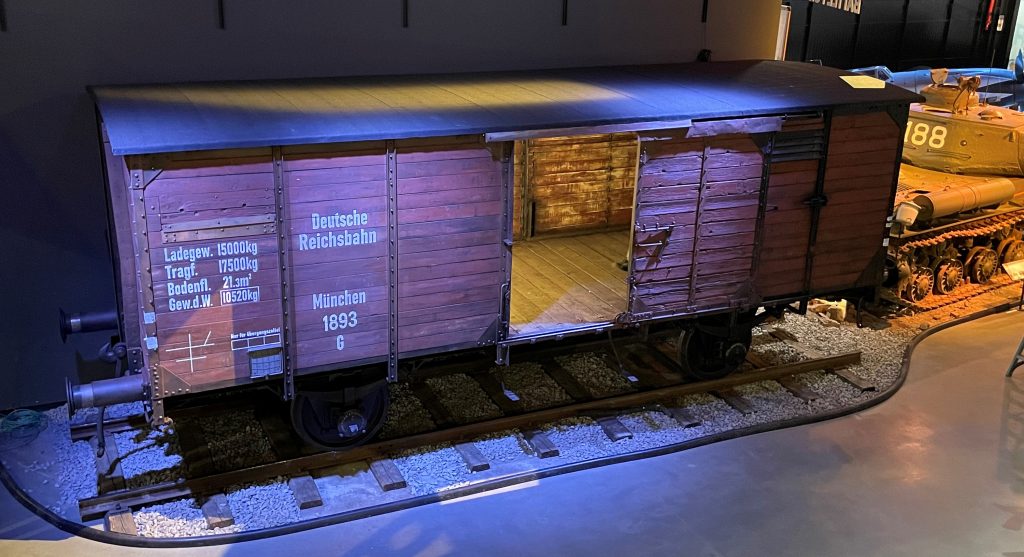
The Holocaust Exhibit at the American Heritage Museum
The American Heritage Museum has completed Phase One of a two-phase project to develop a comprehensive exhibit on the Holocaust from its evil origins, through years of horror and tragedy, and its lasting repercussions on the world in the decades since. The cosmetic restoration and installation of the original WWII-era Deutsche Reichsbahn freight rail car is only the first step as we aim to complete a comprehensive multimedia exhibit within the year to be unveiled on the 80th Anniversary of the Liberation of the Auschwitz-Birkenau Concentration Camp on January 27, 2025.
This rail car was imported to the United States by the American Heritage Museum from Nuremberg, Germany in the Summer of 2023 and has undergone complete restoration over the past six months. One of over 120,000 similar “Type G-10” cars built between 1910 and 1927 for the German National Railway. This 30-foot long, two-axle freight wagon is the type used by the Nazi regime for the inhumane transportation of millions of innocent Jewish people and other persecuted groups to concentration camps and extermination sites across Europe from 1933 to 1945. While no rail car can be directly traced to this terrible use as records were not kept of this type, the sheer numbers of victims transported during the Holocaust points to the likelihood that every car would have been used in this way at some point during its history.
Preservation for the Sake of Remembrance, Education, and Understanding.
The Holocaust represents one of the darkest chapters in human history, characterized by the brutal extermination of millions of innocent lives. It is crucial to remember and understand this horrific event so to prevent its repetition. Historical artifacts play a vital role in educating people about the Holocaust, and among them, this Deutsche Reichsbahn rail car holds profound significance in offering insights into this tragic period. By preserving this artifact and examining the rail car’s historical importance, we can gain a deeper understanding of the Holocaust, its origins, and its lasting impact on humanity.
During World War II, Nazi Germany’s national railway system, the Deutsche Reichsbahn, played a critical role in orchestrating the Holocaust. What was once a mere utilitarian means of transportation became a haunting symbol of suffering. Transformed into vessels of misery, these rail cars carried millions of innocent victims to a horrible destination from which many would never return. A logistical transportation infrastructure that enabled the state-sponsored persecution, mass deportation, and murder of millions by Nazi Germany.
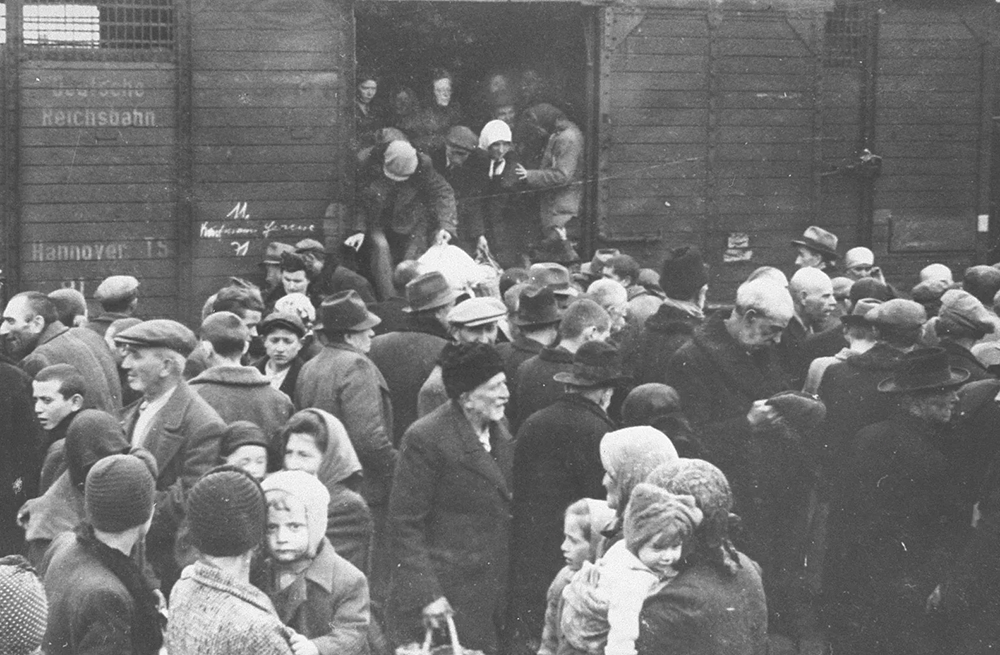
At the American Heritage Museum, the display of this original rail car acts as a powerful symbol, connecting visitors to the reality of the Holocaust as inflicted by Nazi Germany and other Axis collaborators. Standing in front of this relic, one can imagine the unimaginable: the inhuman conditions endured for days, the fear, the uncertainty, and the sheer terror that innocent men, women, and children endured as they were transported to the death camps. It will become a tangible representation of the suffering and dehumanization inflicted upon millions, allowing visitors to establish a personal and emotional connection with the victims.
The presence of a preserved Deutsche Reichsbahn rail car in the Holocaust exhibit offers an invaluable educational opportunity. It enables visitors to comprehend the magnitude of the Holocaust and the systematic nature of its execution and a focal point for discussions about bystander apathy, collaboration, and the moral responsibilities of individuals and institutions during times of crisis. By engaging visitors in thought-provoking conversations, the display fosters critical thinking and raises awareness about the dangers of Antisemitism, prejudice, discrimination, and the consequences of unchecked hatred.
Moreover, the exhibit will serve as a poignant tribute to the millions of Holocaust victims who suffered and perished. It honors their memory by ensuring that their stories are told and that the horrors they endured are never forgotten. By placing the rail car within a larger narrative to be added in Phase Two that will include survivor testimonies, historical documents, and personal artifacts, the American Heritage Museum will provide a comprehensive and immersive experience that pays homage to the victims and preserves their legacy.
Through education, remembrance, and introspection, we can ensure that the lessons of the Holocaust are learned and that future generations are equipped to build a more compassionate and tolerant world.
How you can help
Though the rail car has been installed in the American Heritage Museum, completing Phase One of the project, the most important part of the project awaits in Phase Two. The second phase will develop the exhibit narrative for installation inside and around the rail car that will include survivor testimonies, historical documents, and personal artifacts along with compelling multimedia to tie all the elements together. Phase Two needs your insight and support over the coming year to allow us to complete Phase Two by January 27, 2025 for the 80th Anniversary of the Liberation of the Auschwitz-Birkenau Concentration Camp.
To Contact the Exhibit Development Team
Email: development@collingsfoundation.org or call 978-562-9182
To Make a Donation to the Holocaust Exhibit Fund
Online – Click on the button below:

By Mail:
American Heritage Museum
Attn: Development
568 Main Street
Hudson, MA 01749
Acknowledgements
The American Heritage Museum is grateful to the Czech Family Foundation (https://tmfc.cz) for their assistance in finding the rail car artifact for inclusion in the Holocaust Exhibit.