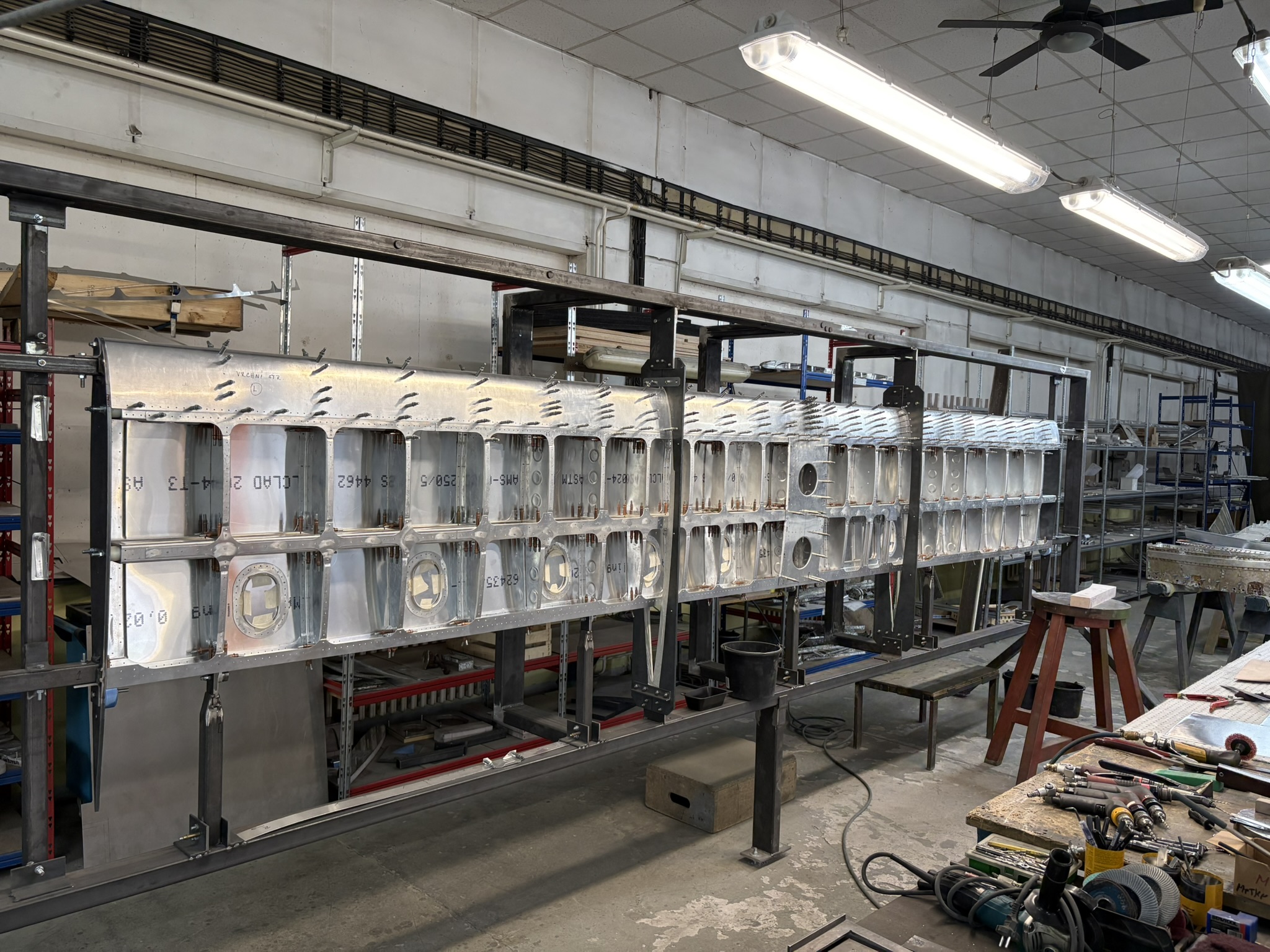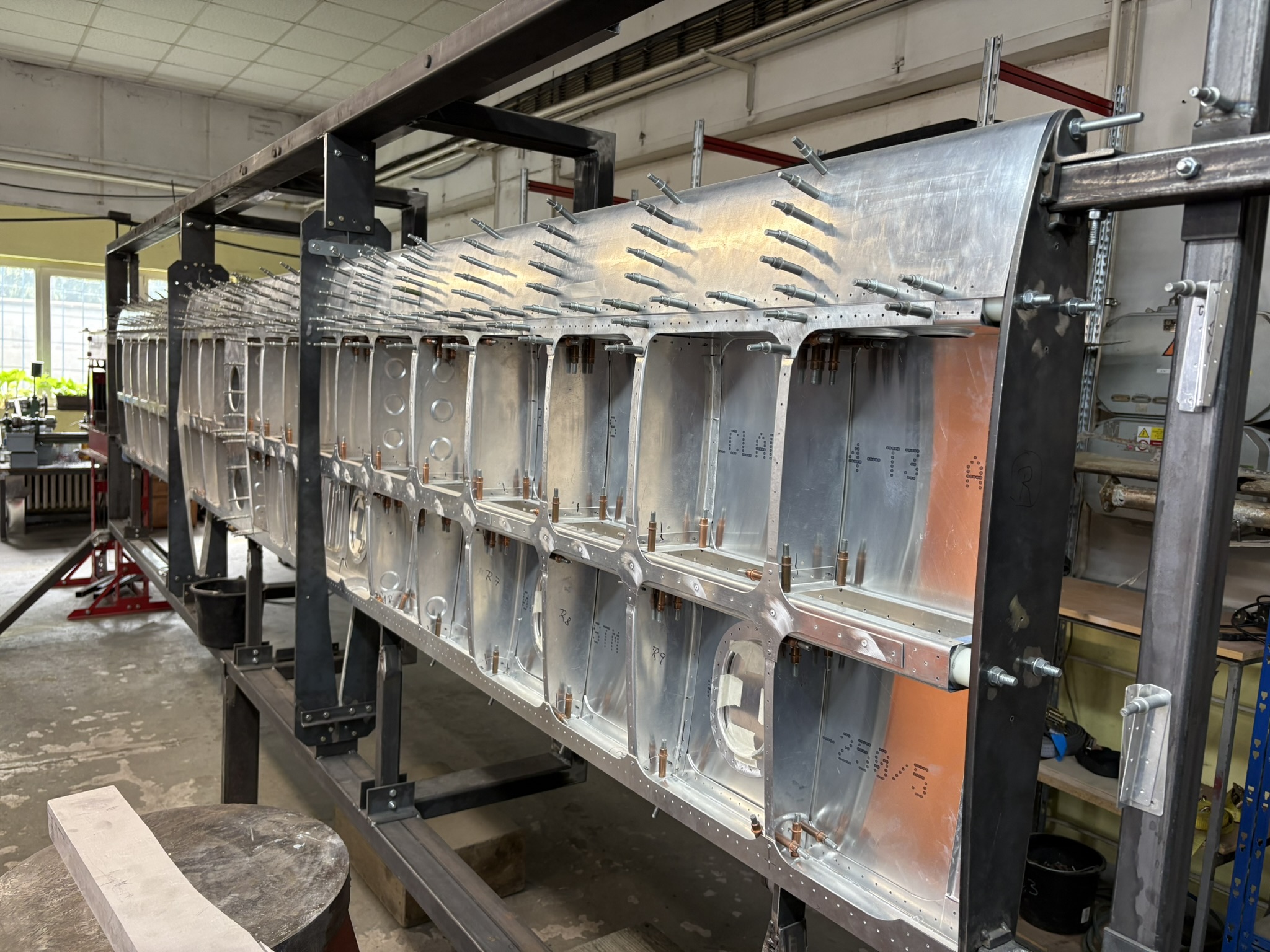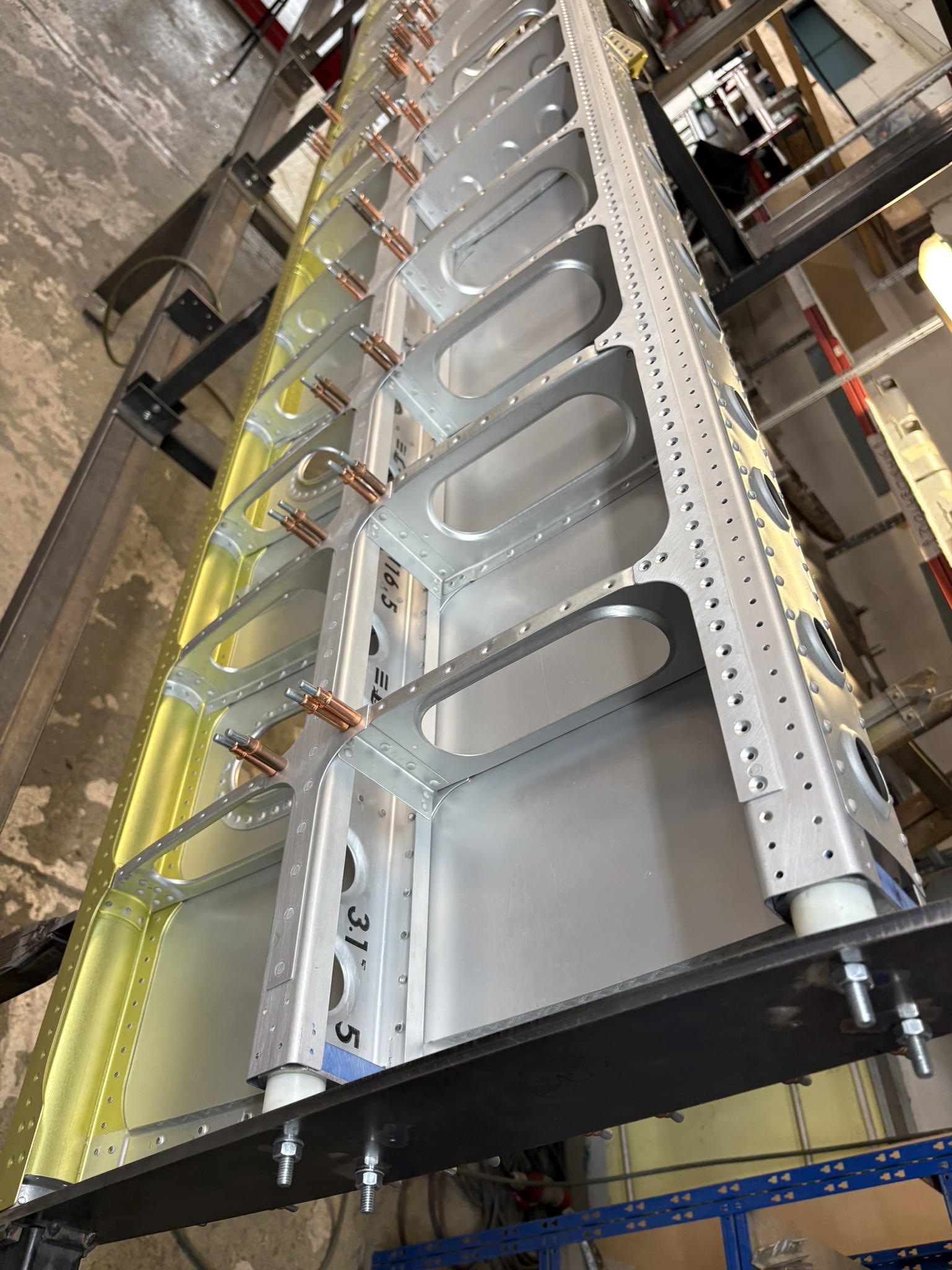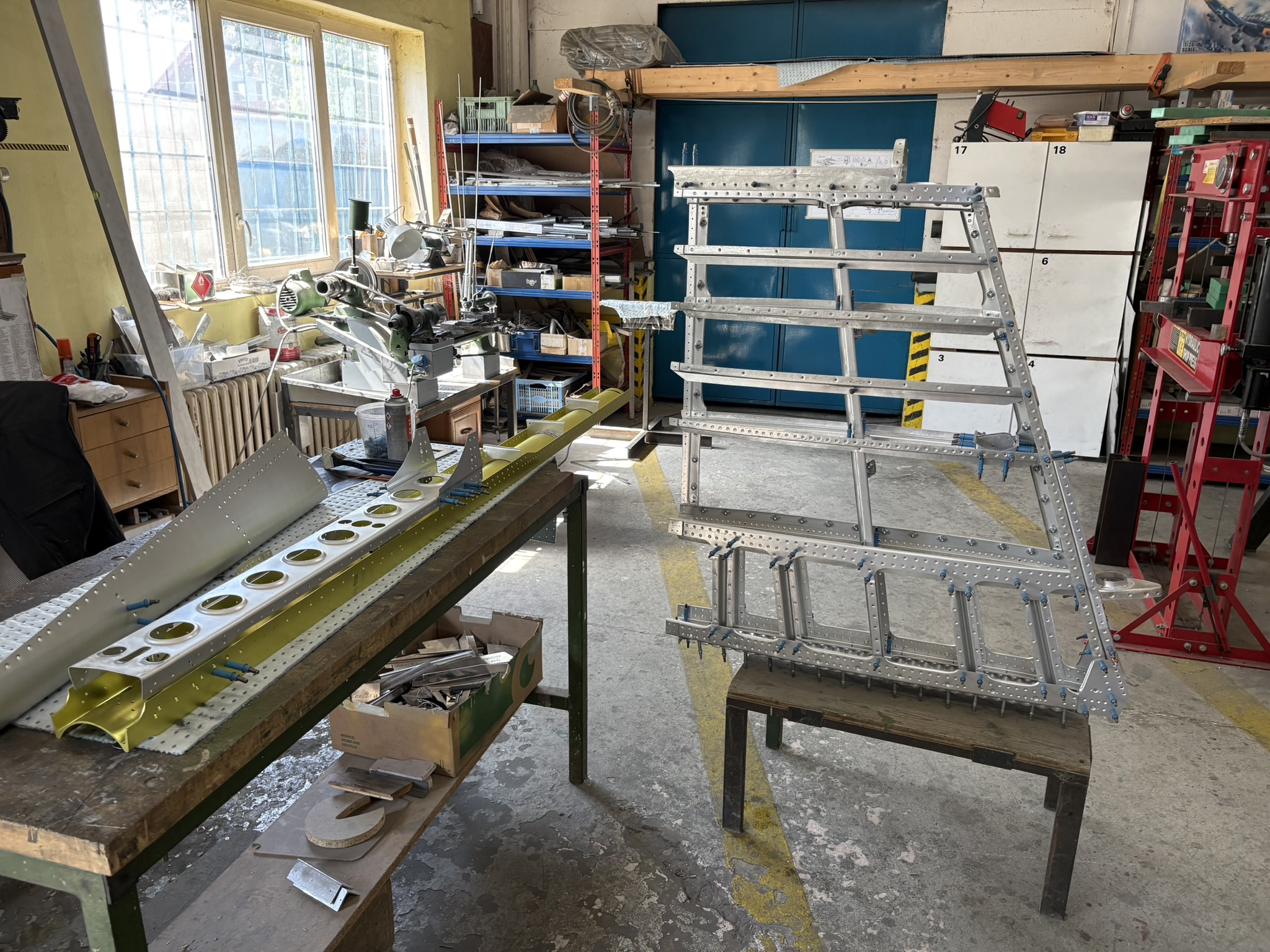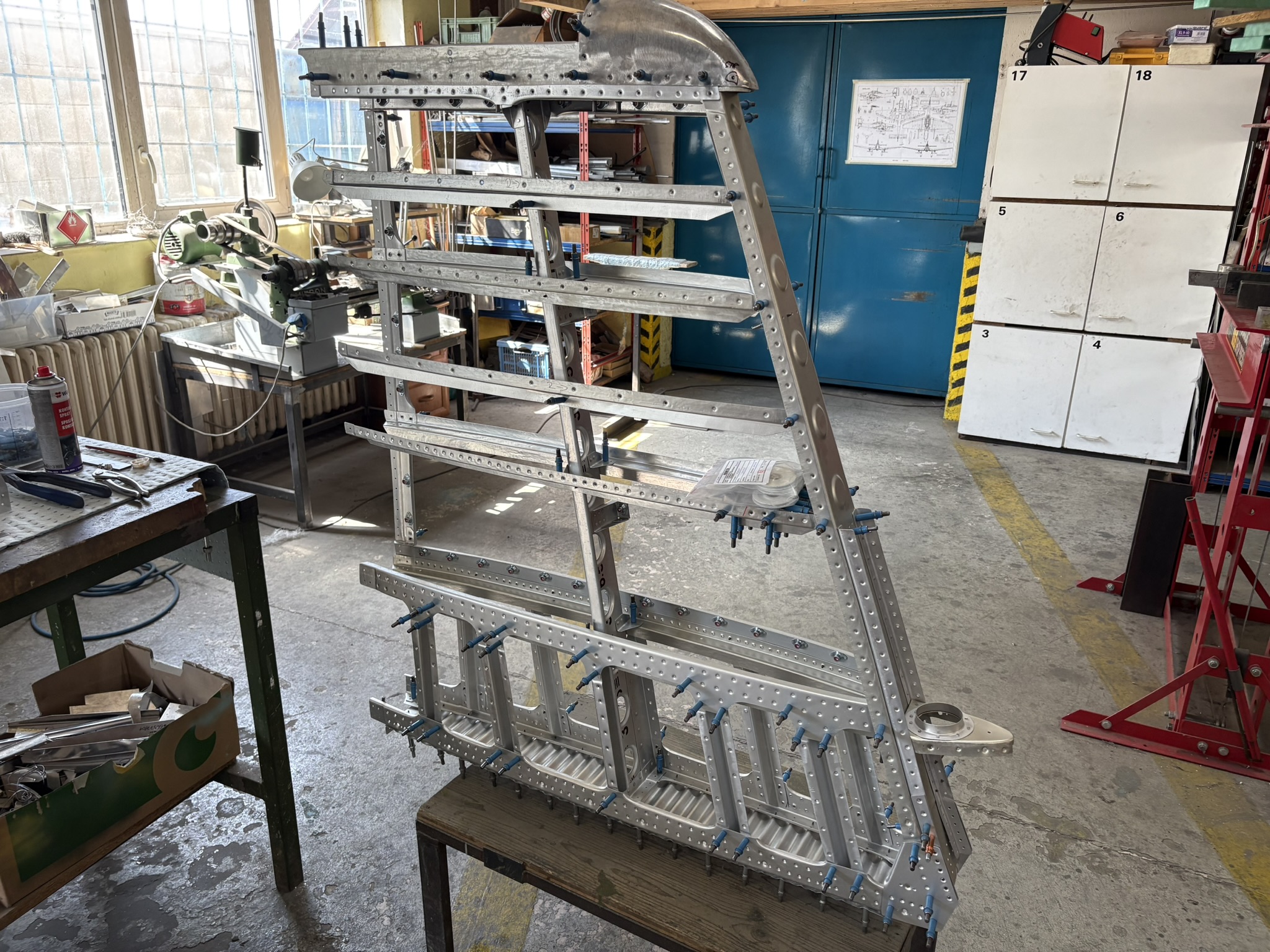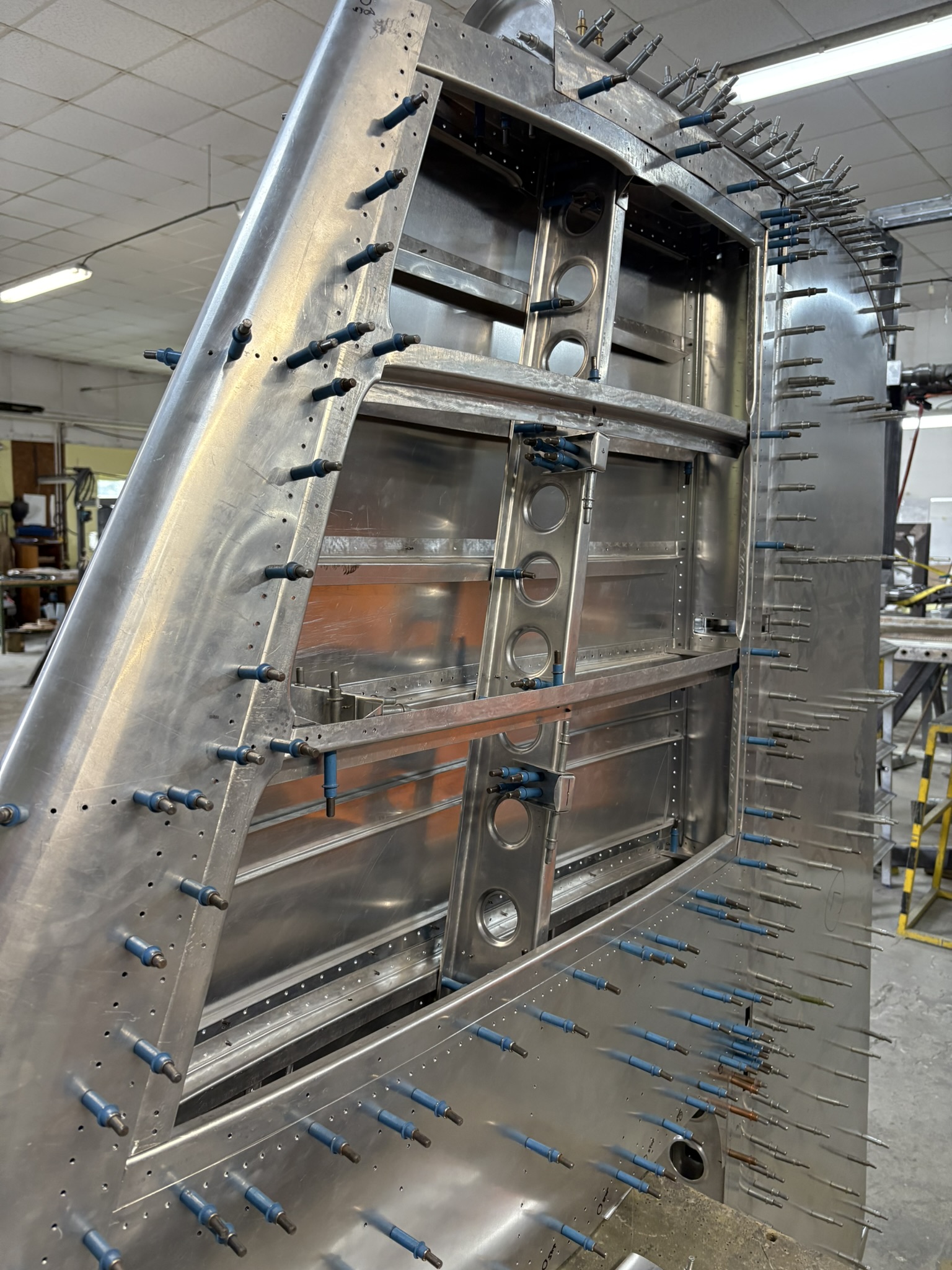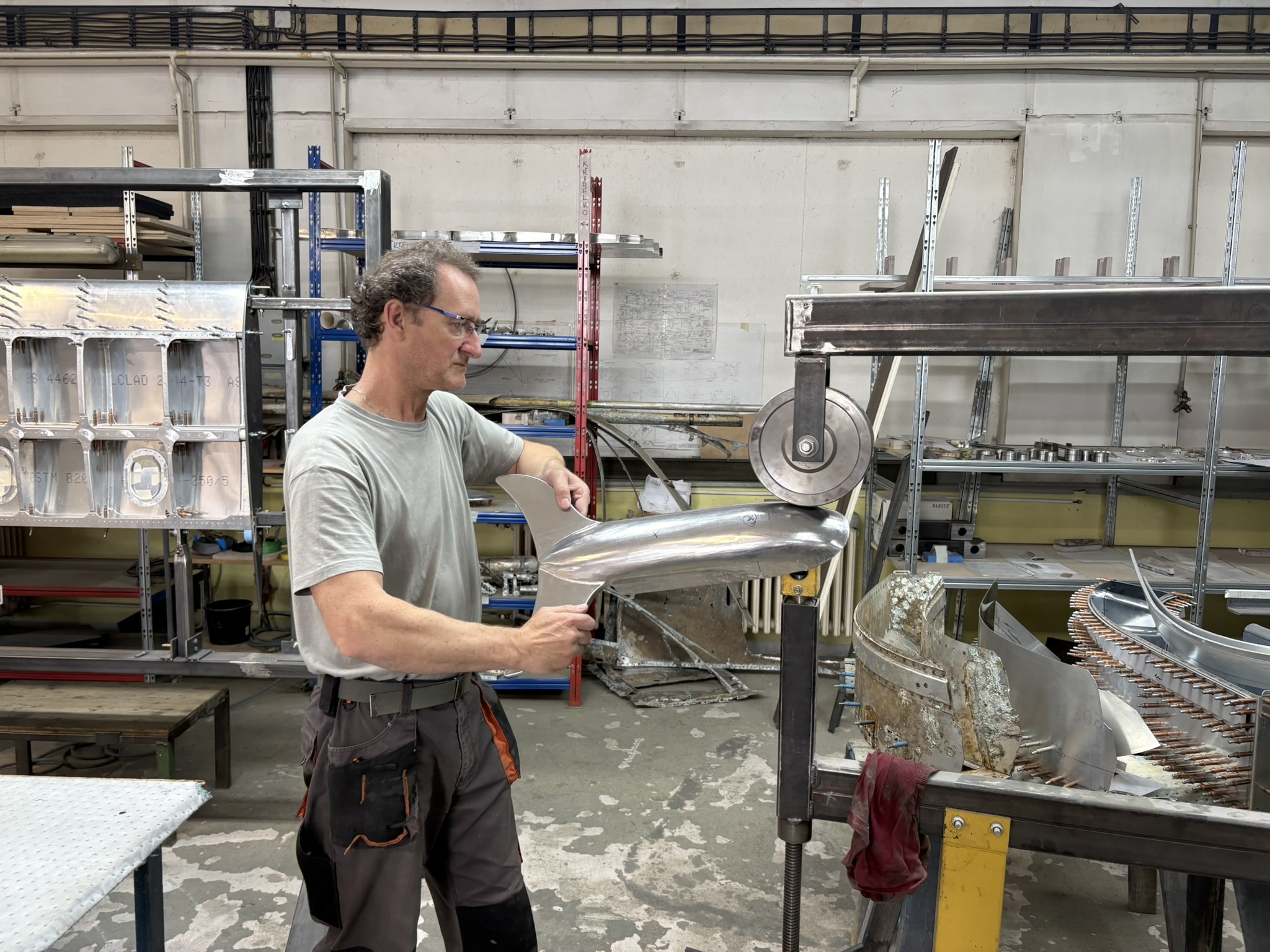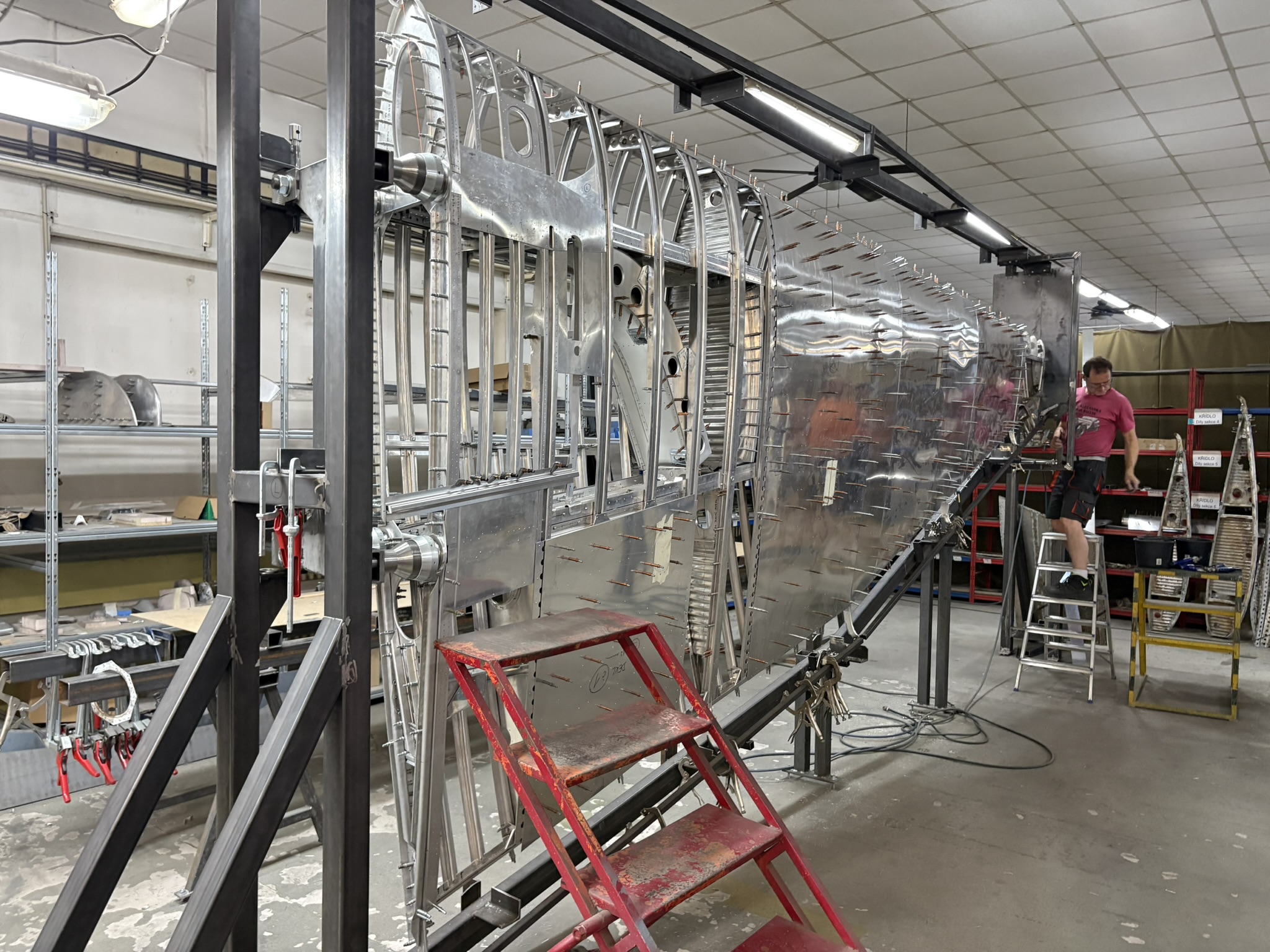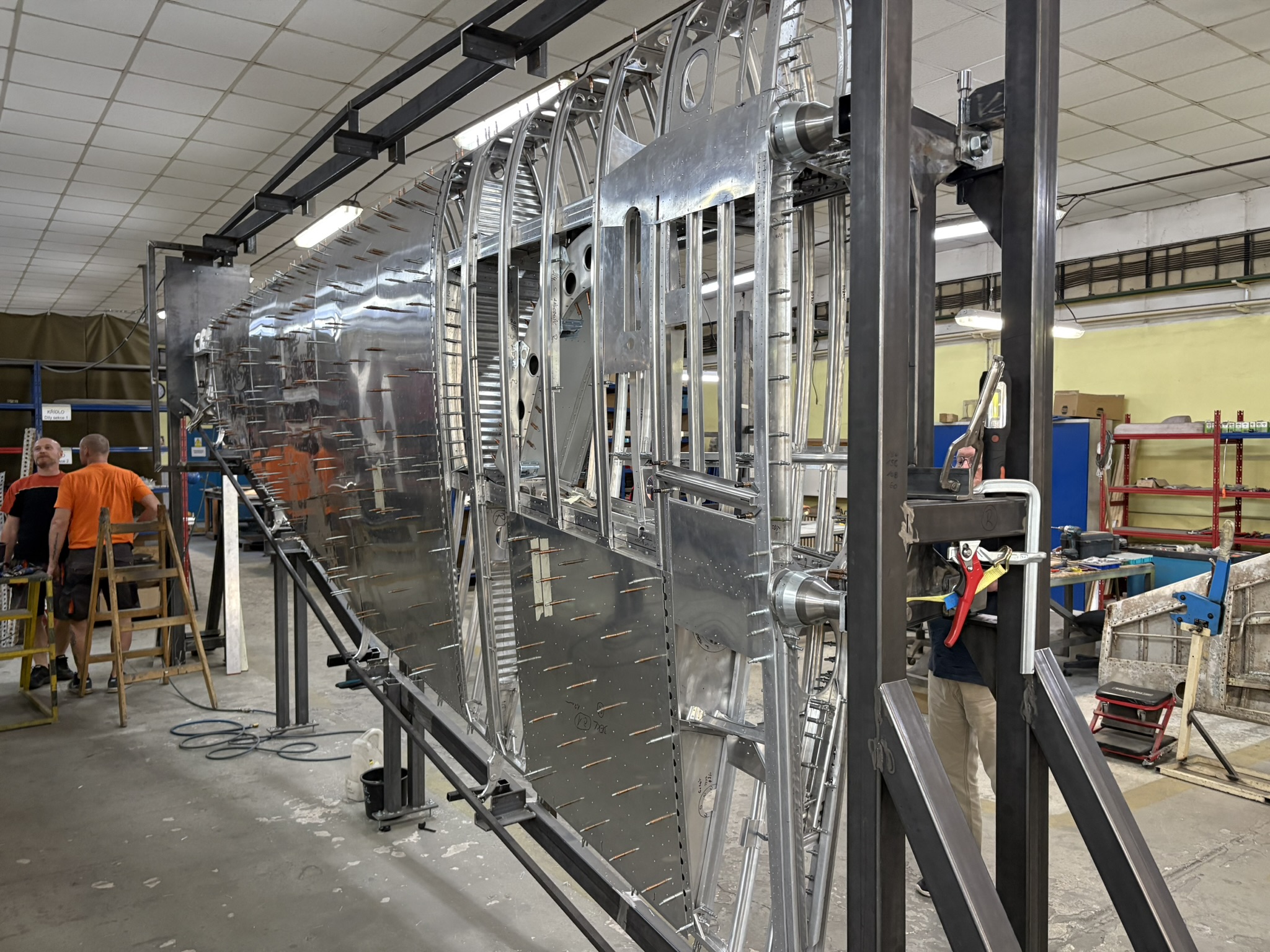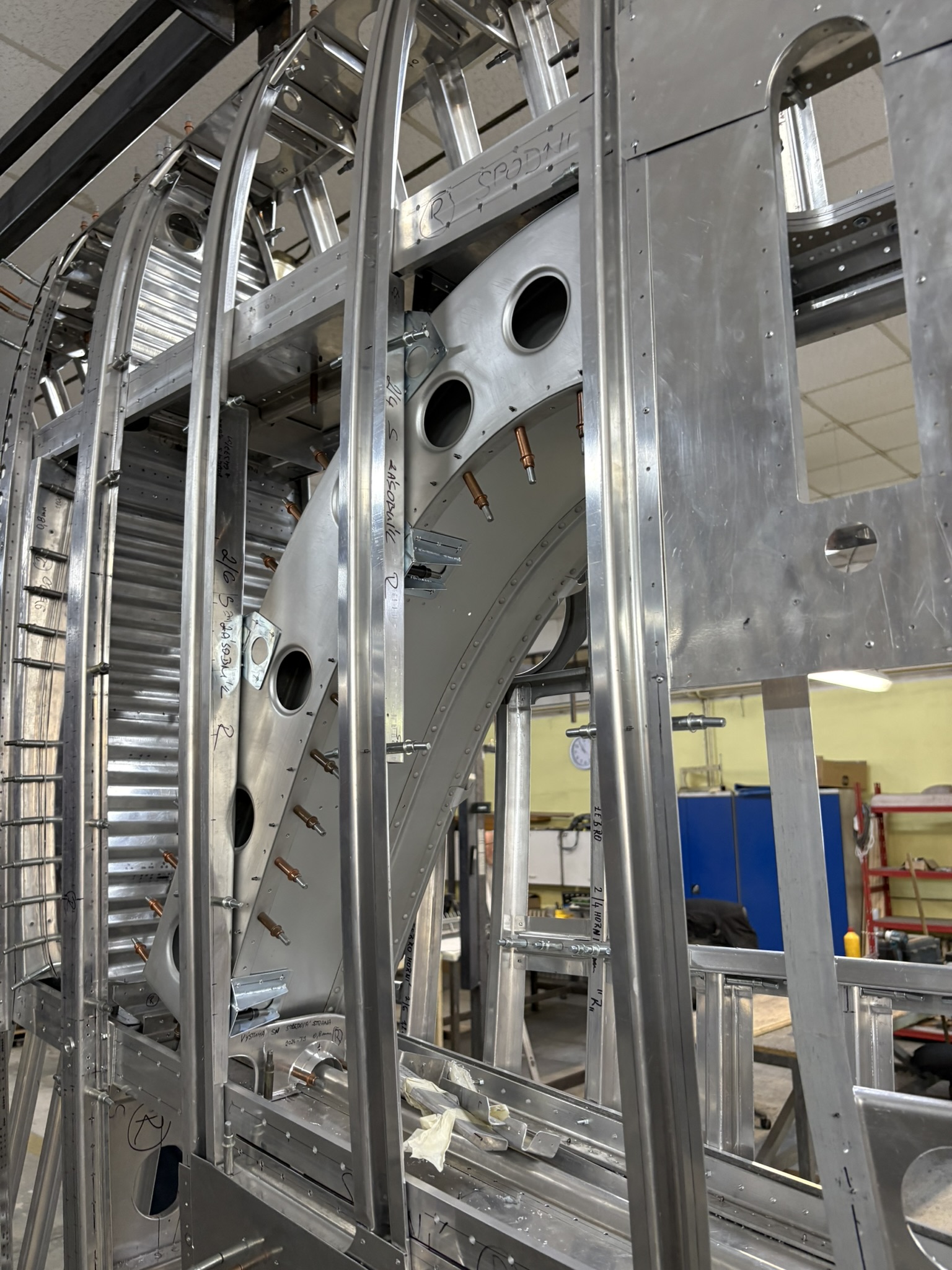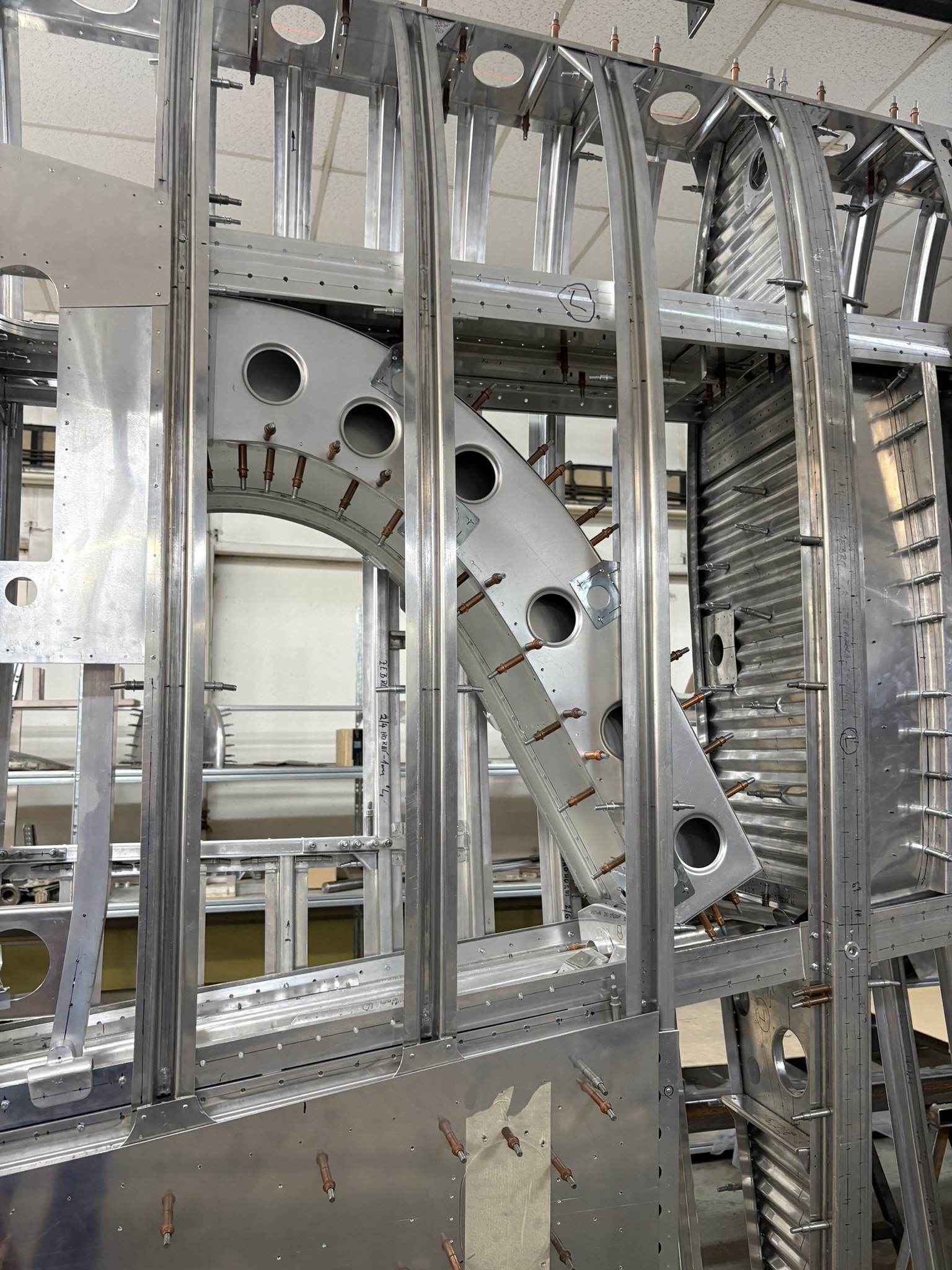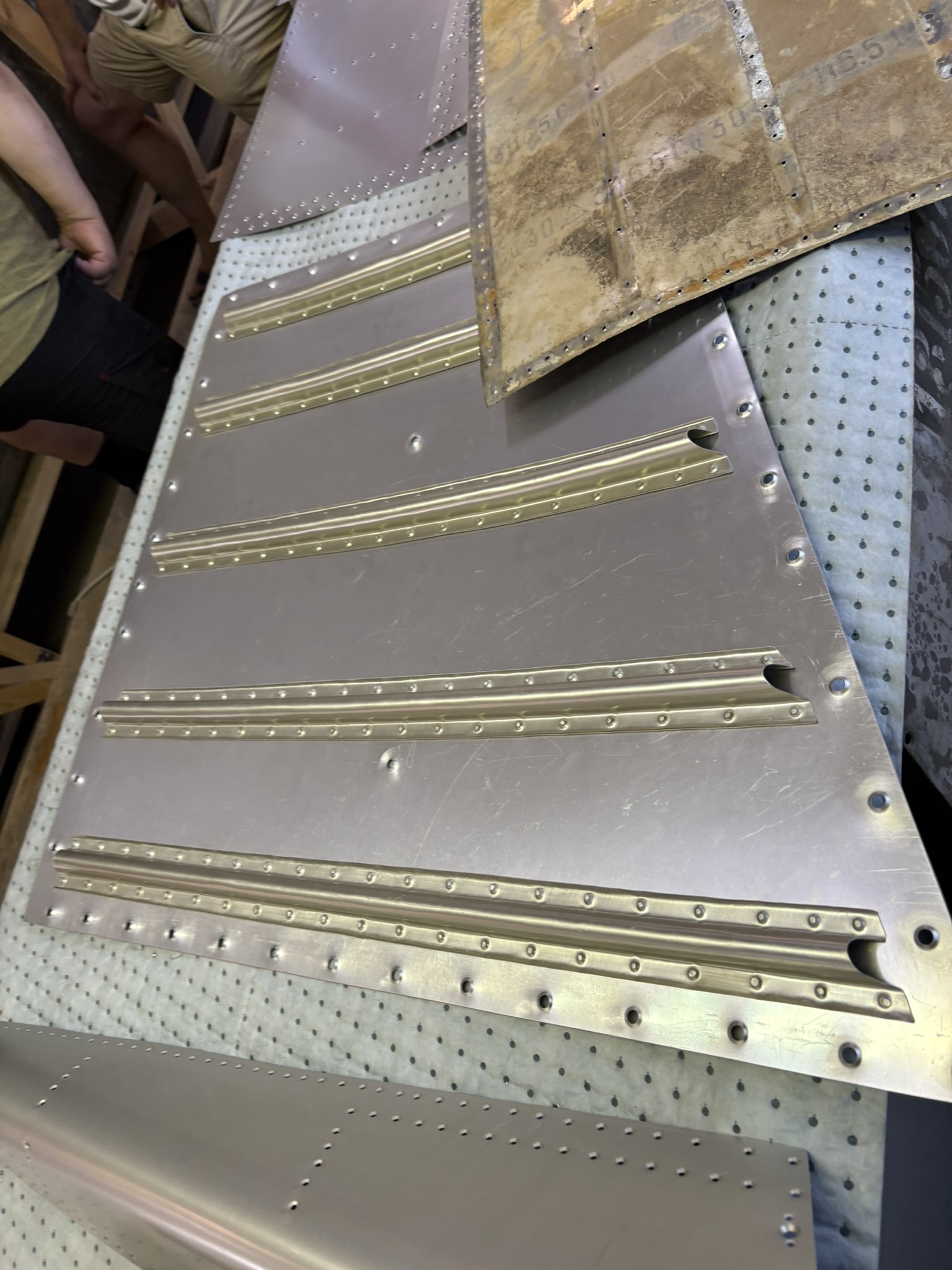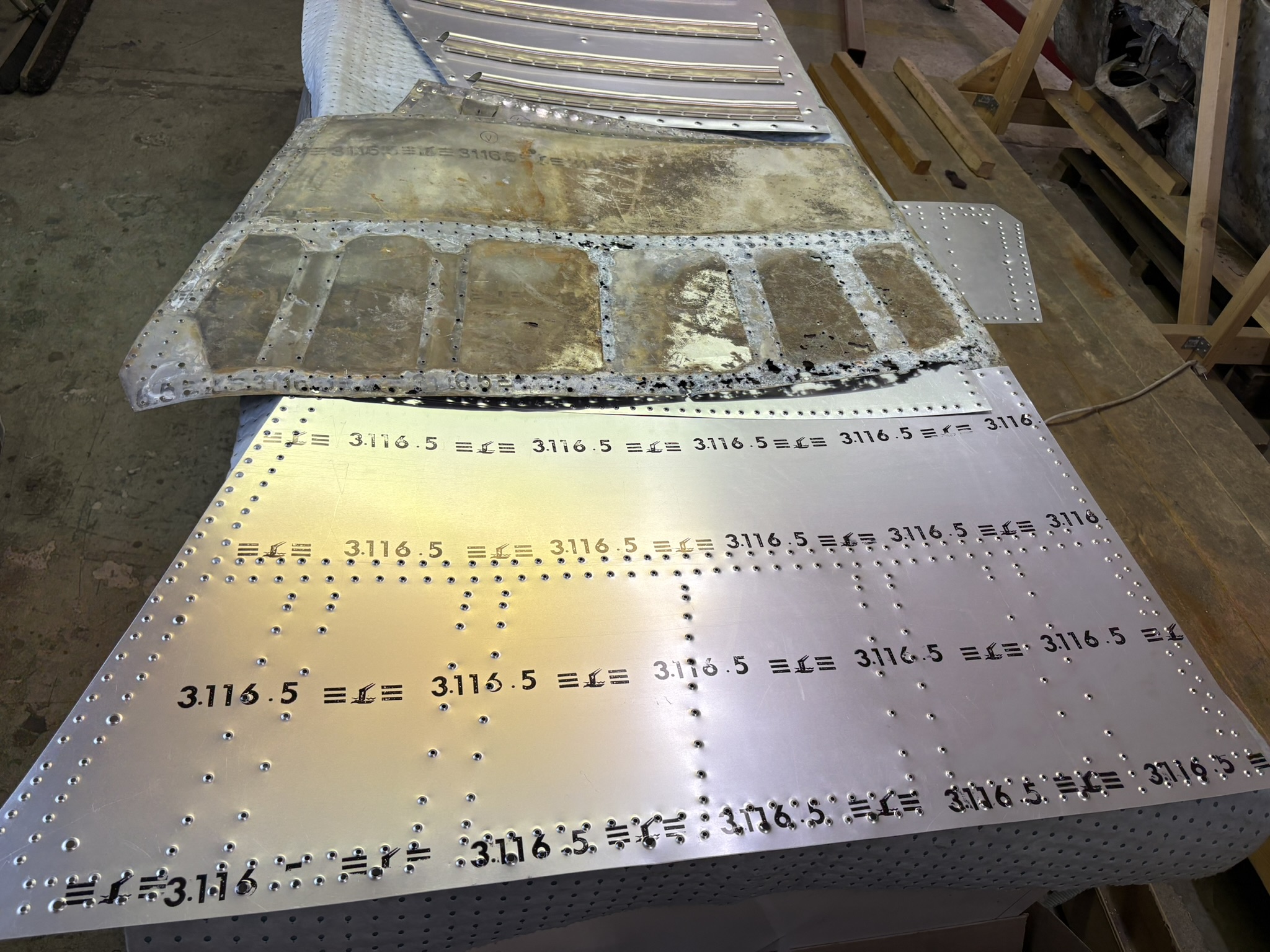
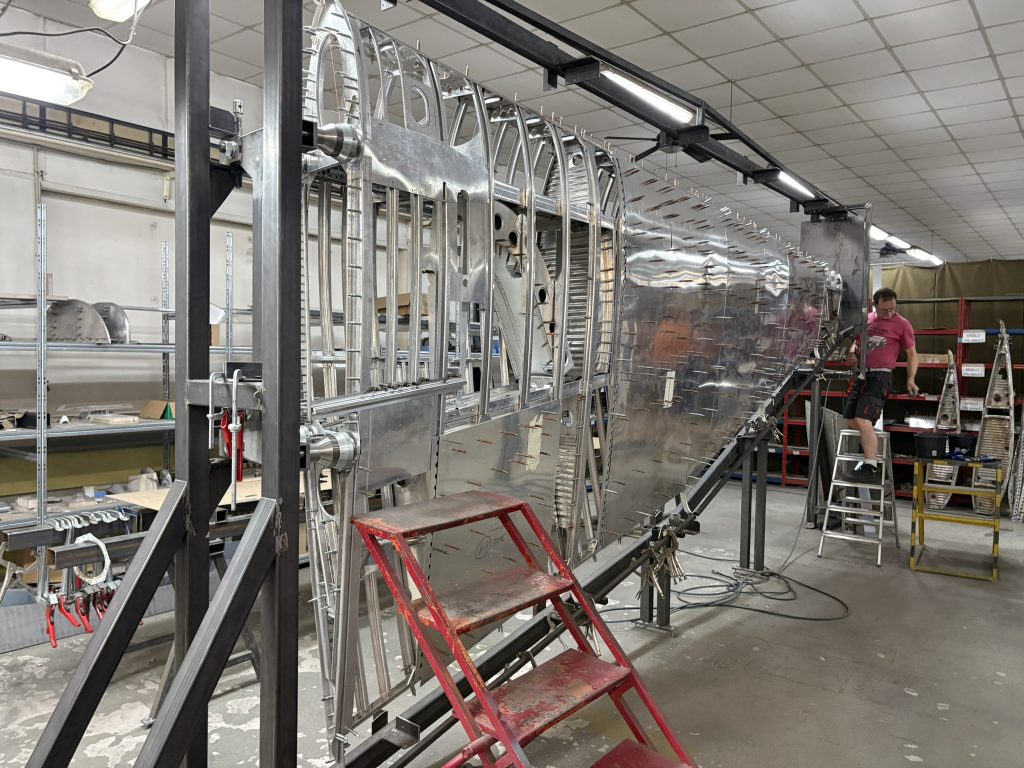
Restoration of the American Heritage Museum’s exceptionally rare Junkers Ju 87D-5 Stuka, Werknummer 131587, has reached another major milestone. The aircraft’s vertical and horizontal stabilizers are now nearly complete down to the anodize and manufacturers stamps, while both wings are nearing completion and undergoing careful test-fitting before final assembly.
The project continues to distinguish itself through an extraordinary commitment to originality, extending well beyond the aircraft’s outward appearance to the materials, original rivits, fasteners, finishes, and manufacturing methods used by Junkers during World War II.
From Wartime Loss to Restoration
Werknummer 131587 served with 1./S.G.5 in Finland during 1944, carrying the tactical code Q9+CH. On April 4, 1944, the aircraft was forced to land on a frozen lake after running critically low on fuel. Before abandoning it, the crew intentionally detonated an explosive charge in the cockpit to prevent the aircraft from being recovered and reused.
When the ice thawed, the Stuka sank into the lake, where the cold freshwater environment helped preserve much of its structure for more than seven decades.
Because the aircraft made a controlled forced landing rather than crashing at high speed, significant portions of the wings and tail survived in comparatively good condition. The fuselage and center section, however, suffered extensive damage from the intentional explosion.
Major Progress on the Wings and Tail
The restoration team has now nearly completed the vertical stabilizer and both horizontal stabilizers, while work on both wings has advanced to the final stages.
Before permanent assembly, newly fabricated ribs, spars, fittings, skins, and other components are being carefully installed and test-fitted in purpose-built wing fixtures before heat treat and anodize. This allows the team to verify alignment and dimensional accuracy before riveting the structures together permanently.
The process is especially demanding because original Ju 87 factory drawings are largely unavailable. The restoration has therefore relied on surviving original material, careful measurements, three-dimensional scanning, and examination of Ju 87 components preserved in museums throughout Europe to create accurate construction drawings.
The objective is not simply to restore a Stuka but to bring it back to exactly the way it was in 1944.
Re-Creating Original German Manufacturing Techniques
That philosophy is evident throughout the project.
The restoration team has meticulously reproduced the different anodizing processes used by Junkers, matching the protective finishes found on surviving original components.
Even the rivets are different from regular metric rivets.
German aircraft construction used rivets that differed from those commonly found in American and British aircraft, including a distinctive 120-degree head angle. The rivets were also manufactured from specialized high-strength alloys.
For Werknummer 131587, the team is using WWII-era German rivets with the correct geometry and material properties. Their use provides both historical accuracy and the structural characteristics intended by the aircraft’s original designers.
These are details that may ultimately be hidden beneath the aircraft’s finish, but they represent the level of authenticity that sets this restoration apart.
Reconstructing What No Longer Exists
Where original parts are missing or too badly damaged to reuse, the team is reverse-engineering them from surviving examples.
One example is the Ju 87’s complex flap-and-aileron control system, which allowed its distinctive ailerons to droop in conjunction with flap deployment. Because the original mechanism in 131587 was destroyed, surviving components from other collections have been examined and digitally scanned so the assembly can be reproduced accurately.
Throughout the restoration, the same principle applies: preserve original material wherever possible, and when a component must be recreated, reproduce not only its dimensions but also its materials, construction techniques, and finish.
The Fuselage Comes Next
With the empennage complete and both wings approaching final assembly, the project will enter another major phase in 2027, when restoration efforts shift to the fuselage and center section.
This area presents some of the greatest challenges of the entire project because it suffered the most extensive damage from the deliberate explosive detonation following the aircraft’s forced landing in 1944.
The restoration team will face the difficult task of reconstructing this critical structural area while preserving as much surviving original material as practical.
As the fuselage work progresses, many of the major restored assemblies will begin coming together and Werknummer 131587 will increasingly take on the recognizable form of a complete Ju 87.
Preserving More Than an Aircraft
Only a very small number of Ju 87 Stukas survive today, making Werknummer 131587 an exceptionally important piece of aviation history.
For the American Heritage Museum, the goal is not simply to create an aircraft that looks correct when displayed. The restoration seeks to preserve the engineering, materials, craftsmanship, and manufacturing methods that went into building the original aircraft more than eight decades ago.
With the tail complete, both wings nearing completion, and the challenging fuselage and center-section restoration ahead in 2027, Junkers Ju 87D-5 Werknummer 131587 is steadily taking shape once again.
It is that attention to details—many of which visitors may never see—that promises to make this restoration truly exceptional.
Once complete, the Stuka will become an important flyable artifact that will be displayed in the planned aviation expansion of the American Heritage Museum. The enormous importance of this icon of World War II combined with its incredible rarity will make it one of the centerpieces of the collection for years to come.
The Full History of Junkers Ju 87D-5 Werknummer 131587
For the full history on Junkers Ju 87D-5 Werknummer 131587, please visit the aircraft page at: https://www.americanheritagemuseum.org/aircrafts/junkers-ju-87d-5-stuka/
Image Gallery